

Sebastian Liste on Documentary Photography in a Shifting Attention Economy
- October 7, 2026
- Posted by: Dex Thompson
- Category: business
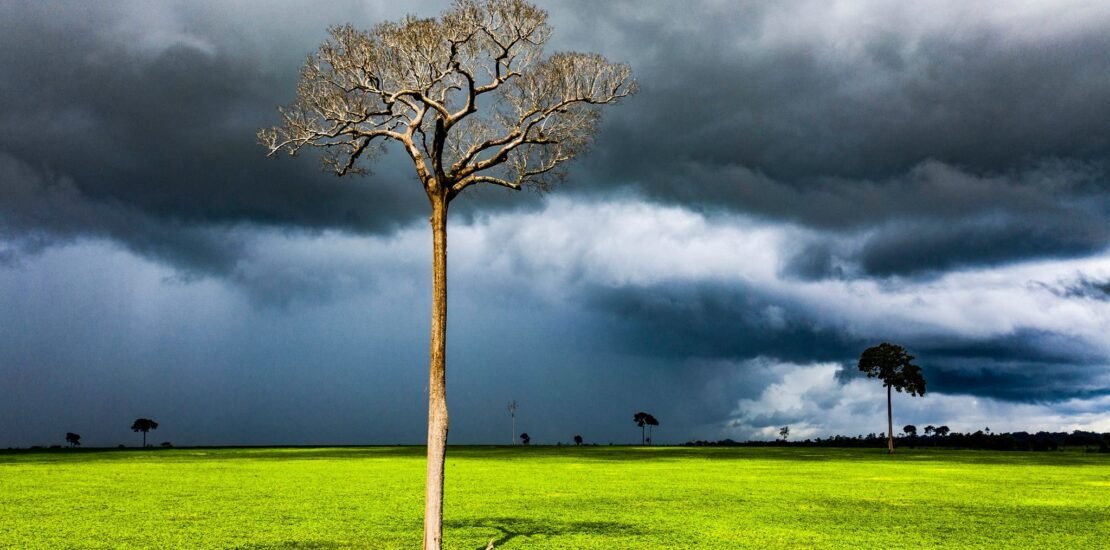
You can spend two years on a project and lose the fight for attention twice. The obvious fight begins when the work enters the world and has to hold the attention of an editor, curator, jury, institution or audience long enough to be understood. The less obvious one starts earlier, while making it, when research, fieldwork, relationships, editing, sequencing and writing all depend on sustained concentration, but the working day keeps interrupting it. A medium built for depth now has to survive fragmented attention at both ends.
Sebastian Liste has spent twenty years on both sides of that problem. A documentary photographer and entrepreneur, member of NOOR Images, Leica Ambassador and founder of PhotoDocumentarians, he makes long-term documentary projects that take years to finish. The Pulitzer Center, the Magnum Foundation, Getty Images and the Alexia Foundation have supported those projects. National Geographic, TIME, The New York Times and The New Yorker have published his photographs, while his work has been exhibited in galleries, photo festivals and museums across the world. Every project has required him not only to make the work, but to carry it into the places where it has to earn somebody else’s sustained attention.
Why Sustained Attention Matters in Documentary Photography
Attention becomes a professional question because long-term documentary work is built through decisions that cannot be made well in fragments.
Sebastian Liste’s own projects show what sustained attention makes possible. On assignment in Caracas for The New Yorker with the writer Jon Lee Anderson, he was photographing the Tower of David, the unfinished skyscraper where more than a thousand families had built a vertical city of their own. The man who ran the Tower told Sebastian what was happening inside Venezuela’s prisons. That conversation led him inside Vista Hermosa to work that became On the Inside. The prison project was not waiting in a plan before he arrived. It came from being there long enough for one conversation to change what the work was.
The same pattern runs through the rest of the work. Sebastian returned for years to the occupied chocolate factory in Salvador de Bahia, Brazil, where dozens of families had rebuilt the abandoned building into a self-governed community, to make Urban Quilombo. He photographed the relationships and changes inside that community over time and printed hundreds of photographs so that every family had an album of its own. For Amazon, the last frontier, he has spent more than a decade moving through the Amazon basin by road, river and plane, following the roads that carry settlement and extraction deeper into the rainforest and photographing both sides of that advance: the migrant families arriving in search of land and the indigenous communities whose territories are being cut apart around them. Understanding that story has required returning across years as the frontier itself keeps moving.
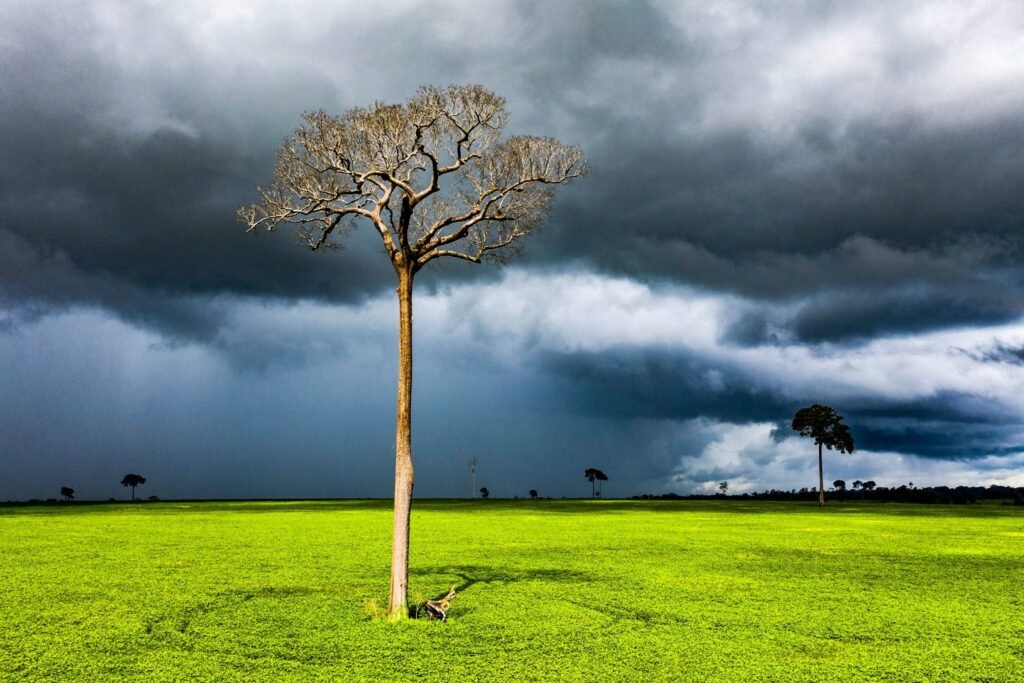
Rondônia, Brazil. A Brazil nut tree left standing in a planted field where the forest has been cleared. From Amazon, the last frontier by Sebastian Liste / NOOR Images.
That kind of work takes more than time. It requires the photographer to stay with a project without losing the thread, long enough for the story to reveal what was not visible at the beginning. That is precisely what fragmented attention threatens.
How Sebastian Liste Separates Attention From Trust
For Sebastian Liste, attention gets the work in front of someone. Trust is what makes them stay with it. Attention spikes and disappears. Trust compounds.
Most of Sebastian’s editorial work began with his own ideas and pitches. Alongside that practice, he has taught and mentored photographers in educational programs at World Press Photo, NOOR Images and Visa pour l’Image, at photo schools and universities, and in portfolio reviews, editing sessions and direct work on proposals, pitches and portfolios.
He has spent twenty years getting his own projects seen and fifteen helping other photographers reshape the edit, rewrite the proposal and sharpen the pitch so their projects reach editors, curators and juries.
The same project has to survive very different forms of attention. A grant proposal has to establish why the project matters, the photographer’s access, the feasibility of the next stage and the ability to carry it through. A publication pitch has to connect the story with a particular publication and audience. An exhibition or a book requires another edit and another sequence because the photographs will be encountered differently. The project does not change, but the material through which other people understand it has to.
That is where attention and trust separate. Trust grows when the photographs, the edit, the proposal and the photographer’s record reinforce one another rather than asking the audience to fill in what is missing.
“The audience is not found. It is cultivated over time,” Sebastian says. A documentary project does not build its audience in a single moment of visibility. It builds it through the people who stay with the work long enough to carry it further.
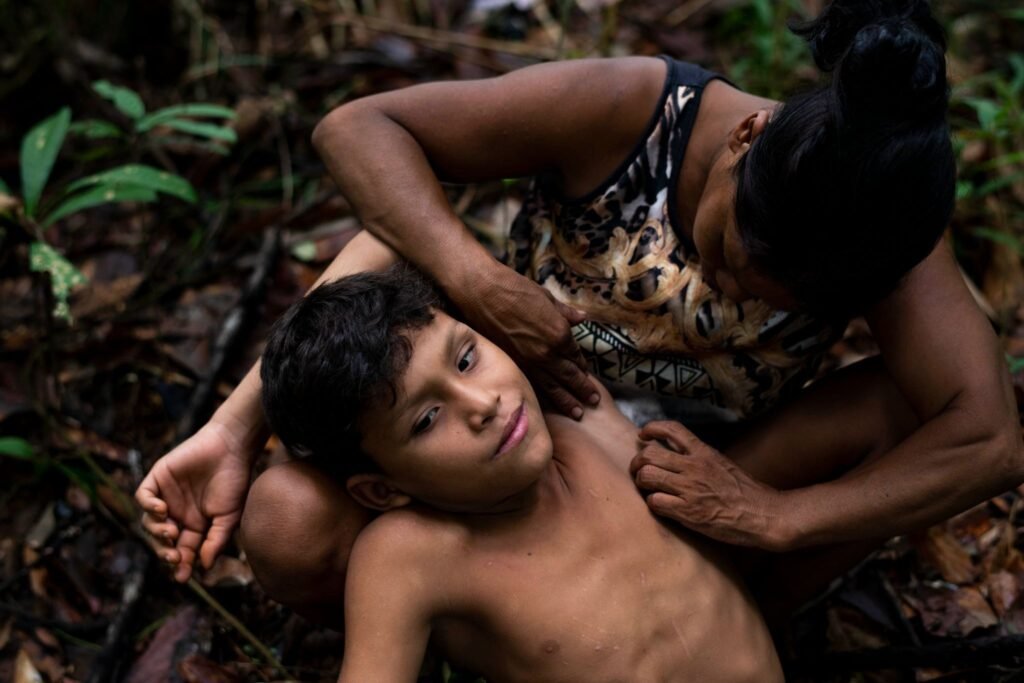
Rondônia, Brazil. A Karipuna mother holds her son on the Amazon forest floor. From Amazon, the last frontier by Sebastian Liste / NOOR Images.
How Attention Leads to Income in Documentary Photography
Attention leads to income when it reaches someone in a position to act on it: an editor who assigns a story, an organization that commissions work, a grant jury that funds a project, a collector who buys a print or a client who licenses a photograph.
Across twenty years, Sebastian Liste has earned a living from his documentary work through assignments, commissions, grants, licensing and fine art prints. He has worked on assignment for National Geographic, TIME, The New York Times Magazine, The New Yorker, GEO and Stern. Amnesty International, the International Committee of the Red Cross, the European Commission and United Nations agencies have commissioned him. Grants have supported his long-term projects. Licensing and fine art prints keep paying after a story has run.
Attention is not the income stream. The assignment, commission, grant, license or print sale is. Attention brings the work to someone who can say yes. Trust gives them reasons to say yes, and once earned, it carries into the next pitch, proposal or assignment.
What Changes When Sebastian Liste Mentors Documentary Photographers
At PhotoDocumentarians, the clearest change is in the material that photographers put forward. Several photographers had spent years applying for grants, sending pitches, approaching exhibitions or preparing dossiers by themselves without success. In the mentorship, proposals are rewritten and projects re-edited with Sebastian’s guidance, draft after draft, so the next submission is not simply another attempt with the same material.
That work reaches outward from the photographs. Sebastian works one to one on the edit and sequence, the proposal and pitch, and on how the project is prepared for the editor, curator, jury or institution it needs to reach. The support around the project strengthens the work, while Sebastian helps each photographer sharpen their own judgment and clarify the goals, voice and point of view behind it.
Photographers Sebastian Liste has mentored at PhotoDocumentarians have received the National Geographic Explorer Grant, the Alexia Grant, the Gomma Grant and Pulitzer Center grants. Their work has been published in The Guardian, Stern, Le Monde, GEO, Marie Claire and El País, and some have become contributors to The New York Times and The Washington Post.
Their projects have been exhibited at Visa pour l’Image, Arles OFF, Xposure Festival, Belfast Photo Festival and Cortona On The Move. One photographer received the Les Filles de la Photo Award for the best exhibition by a woman photographer at Arles OFF during Les Rencontres d’Arles. Others have also published their first photo books, built professional relationships with editors and curators, and received commissions for projects they had previously needed to fund themselves.
A long-term documentary project can survive years of fieldwork and still disappear once it is finished, if there is no clear and realistic dissemination strategy for reaching the world. Distribution is as much a part of authorship as the edit: where the project belongs, who needs to see it and in what order to approach them. That is the second fight for attention.
The story that nobody sees changes nothing.
About Sebastian Liste
Sebastian Liste is a documentary photographer and entrepreneur with twenty years of professional experience. He is a member of NOOR Images and a Leica Ambassador, and his photographs have been published by National Geographic, TIME, The New York Times and The New Yorker. His long-term projects have been supported by the Pulitzer Center, the Magnum Foundation, Getty Images and the Alexia Foundation, and his work has received a World Press Photo award and the Community Awareness Award at Pictures of the Year International. His work has been shown in museums, photo festivals, and galleries from New York to Tokyo.
For fifteen years, Sebastian has taught alongside his photographic practice. Sebastian is the founder of PhotoDocumentarians, a mentorship platform and global community that helps documentary photographers get long-term projects funded, finished, and seen.