

Chuck Ternent and the Case for Cross-Discipline Public Safety Experience
- March 18, 2026
- Posted by: Dex Thompson
- Category: business
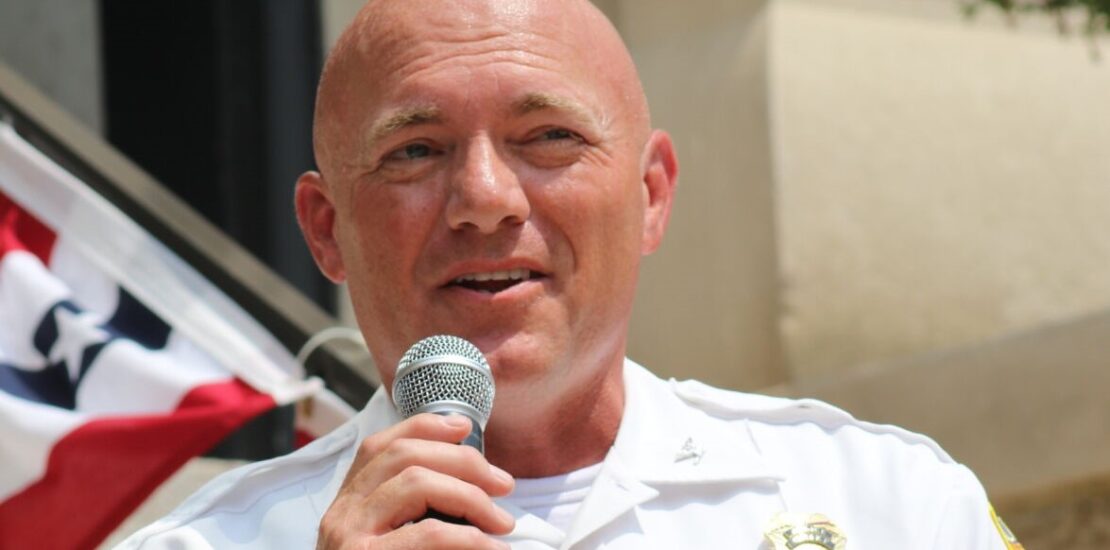
Public safety institutions in the United States are increasingly confronted with challenges that do not fit neatly inside a single discipline. Policing intersects with mental health response. Emergency management intersects with law enforcement. Disaster recovery demands the coordination fluency of a field commander and the stakeholder management skills of an executive. The professionals best equipped to lead in this environment are not those who specialized early and stayed narrow — they are those who built operational fluency across multiple domains over time.
Chuck Ternent is one of those professionals. His career spans more than 30 years across emergency medical services, fire service, and law enforcement — a combination that remains uncommon at the command level and that shapes his current work in public safety consulting, emergency management, and disaster recovery coordination.
Why Multi-Discipline Experience Matters in Modern Public Safety
The structure of most public safety careers encourages early specialization. Paramedics develop clinical expertise. Police officers build tactical and investigative knowledge. Firefighters and emergency managers develop incident command fluency. These disciplines share a common orientation toward crisis response but operate under different protocols, command structures, and professional cultures.
When a leader has worked substantively in more than one of these domains, they carry something that narrow specialists typically do not: the ability to anticipate how a decision in one system will land in another. They understand the operating logic of the agencies they are coordinating with, not just the agencies they represent. That cross-discipline understanding is not theoretical. It is built through years of working inside those systems — responding to calls, supervising operations, managing personnel, and being accountable for outcomes.
Chuck Ternent built that understanding the hard way. He became one of the youngest paramedics in Maryland before he ever entered law enforcement. He has served as an Assistant Fire Chief in parallel with a decades-long policing career. He joined the Cumberland Police Department in 1993 and spent the next three decades advancing through every significant rank the department offered.
The Investigative Foundation
Chuck Ternent‘s depth in law enforcement was built not at the administrative level but in the field. As a detective and investigative supervisor, he worked homicide cases, arson investigations, crime scene analysis, hostage negotiation, and child and sexual abuse inquiries — a portfolio of specializations that reflects both range and rigor.
Arson investigation alone represents a bridge between law enforcement and fire service disciplines, requiring an investigator to understand fire behavior, accelerant evidence, and structural analysis while building a criminal case that meets legal evidentiary standards. The fact that Ternent developed expertise in this area speaks to the cross-discipline orientation that has defined his career.
Hostage negotiation adds another dimension. It requires acute situational awareness, the ability to manage high-stakes communication under extreme pressure, and an understanding of behavioral dynamics that is distinct from standard investigative or patrol work. Ternent trained in and deployed these skills over years of active duty.
Moving from detective to Sergeant, Lieutenant, and ultimately Captain, he carried these capabilities into supervisory and command roles — building operational systems, managing personnel performance, and overseeing the kind of complex, multi-agency responses that require leaders who understand how different disciplines interlock.
Command-Level Leadership Across a Period of Institutional Pressure
Chuck Ternent was appointed Chief of Police of the Cumberland Police Department in 2019 following a national search — a process that evaluated candidates from across the country and resulted in the selection of a career officer rooted in the community he would be leading.
The years that followed were among the most demanding in recent memory for American law enforcement executives. The COVID-19 pandemic disrupted staffing, protocols, and every dimension of community-facing policing work. The national environment around law enforcement shifted in ways that required Chiefs to navigate institutional criticism, community expectations, staffing shortfalls, and rising crime pressures simultaneously.
Chief Ternent led the Cumberland Police Department through that period. He maintained operational continuity during staffing crises, sustained community relationships under conditions of national tension, and continued to advance departmental capabilities in technology and crime reduction. The challenge was not any single crisis — it was the compounding of multiple, simultaneous institutional pressures over an extended period. That is a specific kind of executive test, and it is one that Ternent met.
Emergency Management as a Natural Extension
When Chuck Ternent retired from law enforcement in 2025, he did not step away from public safety work. The May 2025 flooding in Western Maryland produced an immediate and sustained regional emergency, and Ternent was appointed Chair of the Western Maryland Flood Recovery Committee.
The role reflects a precise match between the demands of long-term disaster recovery and the capabilities Ternent developed across his career. Flood recovery requires sustained coordination across federal, state, and local agencies. It requires communicating with community members who are experiencing acute distress while simultaneously navigating bureaucratic processes that move slowly by design. It requires making consequential decisions with incomplete information and maintaining organizational momentum over a timeline that extends well beyond the initial emergency.
These are not novel challenges for Ternent. They are structurally identical to the challenges he navigated as a detective supervisor managing multi-agency investigations, as a police captain overseeing high-crime district operations, and as a Chief managing an institution through compounding crises. The operational context changed. The underlying competency requirements did not.
What Cross-Discipline Experience Produces
The value of a career like Chuck Ternent‘s is not simply that it produced someone with a long list of credentials. It produced someone with a specific kind of operational literacy — the ability to understand, from the inside, how different public safety systems work, where they align, and where they create friction.
That literacy is increasingly in demand. Communities facing complex emergencies need leaders who can coordinate across disciplines without losing operational effectiveness. Government agencies need consultants who understand the difference between what a policy requires and what a field operator can actually execute. Law enforcement organizations need trainers who have held every rank they are teaching about and navigated every kind of institutional pressure their students will face.
Chuck Ternent‘s professional services — public safety consulting, emergency management, disaster recovery coordination, and law enforcement training — are grounded in exactly that kind of experience. They represent not a repackaging of credentials but a direct application of 30 years of cross-discipline work to the challenges that public safety institutions currently face.
About Chuck Ternent
Chuck Ternent is a public safety leader, emergency management professional, and disaster recovery coordinator based in Western Maryland. With more than 30 years of experience across law enforcement, emergency medical services, and fire service, he served as Chief of Police of the Cumberland Police Department from 2019 until his retirement in 2025. He currently chairs the Western Maryland Flood Recovery Committee and provides consulting and training services in public safety, emergency management, and law enforcement leadership.